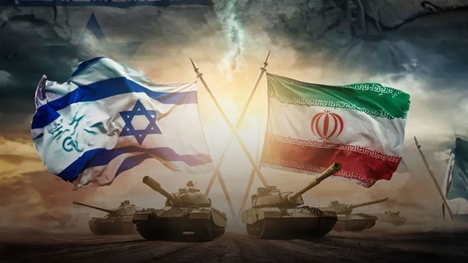
Israel has a rich history of using decapitation and pre-emptive strategies to maintain its military dominance in the region. The rise of two new great powers, China and Russia, has shifted the landscape of great power politics, signalling a new global order. Nevertheless, Western powers continue to endeavour to maintain their status as the dominant global hegemon. To preserve their global dominance, they must cripple every power that could aid China and Russia in forming a balancing coalition against western global dominance, including Iran and South Korea.
Thus, in the strategically significant Middle East, some analysts argue that western powers positioned Israel as a key security partner and established it as a regional hegemon. In this regard, the Islamic Republic of Iran has been viewed as a peer competitor to Israel's dominance in the region.
With an understanding of Israel's pre-emptive strike operation rising Lion against Iran in June 2025, the situation might cause a shift in the balance of power in West Asia. Following the Israeli attack on Qatar, it suggests Israel’s pursuit of regional influence, indicating that no regional actors have effectively constrained its operations in the region. Additionally, the possibility of another Israeli attack on Iran indicates that Israel’s regional objectives appear ongoing.
From this perspective, the Saudi-Pakistan mutual defense pact serves as another sign of the security dilemma in the Middle East, prompting regional states to seek ways to challenge and balance Israel's and the US's interests. Such a move by Saudi Arabia shows the perceived limitations of Western security guarantees. It encourages the emerging multipolar order, which gives smaller-power states an option to maintain their sovereignty and survival. This article will explain how US–Israeli military actions against Iran will shift the balance of power from regional to international rivalry. What role can Russia and China play?
Western Hegemony and Israel’s Offensive
Since the creation of Israel, Western powers have continued to support it, and it has been embedded within the strategic framework shaped by Western influence in the Middle East. Historically, its foundation and security doctrine have been aligned with broader Western geopolitical objectives. Despite the ideological motivation, the matter also shaped geo-economic, geostrategic, and geopolitical interests.
It is widely recognised that Israel serves the best interests of the US in the Middle East, implying that the interests of both states are closely aligned. Additionally, Israeli lobby groups have wielded significant influence in certain Western political circles, stopping Western leaders from distancing themselves from the Middle East conflict, even if it conflicts with their domestic views. Given the socio-political reality in West Asian nations, the situation is viewed differently, and Israel's actions are seen as threats to regional stability.
Regardless of how widely criticized the Israeli government's actions were, the remaining Western leaders supported their operations that were widely condemned globally. Many security experts believe that Israel's offensive against Iran aims to provoke the US into conflict with Israel. Unfortunately, the predictions didn’t take long to come to reality. The US bombing of Iran's nuclear sites served as another significant warning indicator, highlighting the threat of the US actions, which pose a substantial risk to the global community.
Multipolar response: Russia and China's Interests
Israel's military action towards Iran is impacting China's primary interests in the region. Based on its geographical boundaries, this hostility impacts China's regional economy and security interests. Additionally, Iran is a key source of oil and gas for China. Furthermore, both nations benefit from a cooperative environment regarding their political and security interests. This means that Iran and China share a strategic competitor in Western states.
In contrast, China faces strategic rivals in East Asia, primarily in the South China Sea and the East China Sea. The fundamental challenge is that the US pursues an assertive policy towards China. The US policy in East Asia aims to prevent China from dominating the region, driven by competition for regional hegemony. The US and its regional allies, Japan and South Korea, exert considerable pressure to maintain regional security and balance. The presence of US forces in East Asia would prevent Chinese troops from gaining control of the region. Therefore, to remain a global power, China needs to counter rival influence from its own doorstep.
Like China, Russia faces threats from its Western border. Since the collapse of the Soviet Union, NATO countries have considerably expanded their influence towards the Russian border. The Russian Federation considers Ukraine's desire to join NATO an existential threat and has drawn a red line to the West. In February 2022, the Russian military initiated a special operation called the “Denazification and Demilitarisation operation” in Ukraine. The West imposed approximately 28,500 sanctions on Russia, intended to reduce its economic strength and make it harder for the country to continue or sustain its military operations at the same pace. Despite these attempts, the Russian economy continued to grow.
Strategic Calculus
From China’s strategic calculations, suppose the West succeeds in its goal of instigating regime change or inflicting significant damage on Iran. This could pose a significant strategic threat to China if it faces NATO aggression from both the east and the west simultaneously. Strategically, China aims to balance its interests with Israel and Iran in the short term, avoiding direct involvement for two main reasons. First, China focuses on soft power—economics and investment—and seeks to avoid confrontation with the West. Since Iran and Russia are strategic partners and collaborate on security in the war in Ukraine, China might adopt a buck-passing strategy, leaving the complex part of the issue to Russia.
However, the situation may differ significantly from Russia’s strategic perspective. In the latest incident, Moscow refrained from rushing to Iran’s aid, prioritizing its own strategic interests and its ongoing war in Ukraine, for three main reasons. First, Russia’s primary objective remains to contain Western forces near its borders and to weaken Kyiv’s military capabilities swiftly. Secondly, Russia benefits from the divisions within NATO over the Ukrainian conflict, as these rifts help distract the United States from European pressures to sustain support for Kyiv. Thirdly, both Russia and China aim to showcase to the international community that the United States persists in its hostile policies and interventions against sovereign nations. This narrative serves as a powerful propaganda instrument against Western powers.
Iran is not merely a bilateral ally but a vital strategic asset and reliable partner for Moscow. The existing agreement between the two nations extends beyond a conventional defence pact, such as those Russia maintains with North Korea and Belarus. This distinction may further explain Moscow’s caution and calculated approach towards the region. Given current global dynamics, Russia and Iran should consider reevaluating their strategic partnership and exploring the possibility of forming a formal defense alliance, as ongoing conflicts in the Middle East and Eastern Europe present significant challenges in an increasingly complex multipolar environment.
Ultimately, the condemnation from Russia and China of the Israeli attack on Iran, along with diplomatic pressure, may serve as a significant step; however, the situation on the ground is markedly different. Considering the events of the past three decades in the Middle East under the unipolar order, alongside the current situation in Gaza, could suggest an alternative approach to addressing this threat. The second Israeli attack on Iran may not be immediate; however, security strategies suggest that a potential attack could occur anytime.
Conversely, should the U.S and Israel succeed in their ambition to destroy Iran and instigate regime change; it would undoubtedly influence the global perception that Russia and China may not defend their partners if they get into trouble. This idea will be beneficial for Western propaganda, reinforcing the notion that the world remains under a unipolar order. To prevent a global unipolar order and U.S. dominance, Russia and China must take decisive action to form a balancing coalition. The situation of the Islamic Republic of Iran represents the ultimate test for Moscow and Beijing.